Core Facilities (iPSCore)
About the Core Facility
Induced pluripotent stem cells (iPSCs) are generated by reprogramming differentiated somatic cells into a pluripotent state through the expression of defined reprogramming factors. The discovery of iPSCs by Prof. S. Yamanaka at the Center for iPS Cell Research and Application (CiRA), Kyoto University, has ignited a new era of cell-based therapy initiatives and rewarded Yamanaka and his coworkers with the Nobel Prize for Medicine in 2012. iPSC-technology has experienced tremendous progress in the field of disease modelling, early drug discovery and regenerative medicine.
The iPSC Core Facility provides researchers with comprehensive support for human induced pluripotent stem cell research. We offer standardized workflows, technical expertise, and generation of cells to facilitate reproducible and high quality research projects.
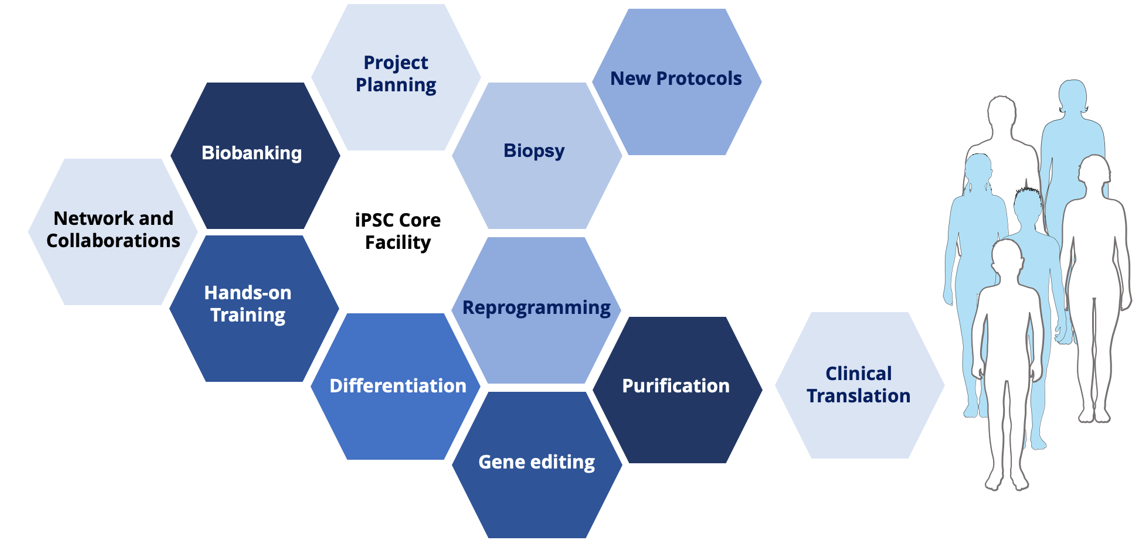
Our services cover the complete iPSC workflow
We generate high-quality iPSC lines from patient- or donor-derived somatic cells, including comprehensive quality control and characterization.
We provide high-quality iPSC-derived cell types using robust differentiation protocols, including quality control to verify cell identity and differentiation efficiency.
We offer hands-on training in iPSC culture and maintenance, and the theoretical background to help researchers establish these techniques in their own laboratories.
We generate custom gene-edited iPSC and iPSC-derived cell lines, including quality control and characterization to ensure accurate genome editing and cell line integrity.
By providing established protocols, quality controlled procedures, and technical expertise, we enable researchers to focus on their scientific questions rather than the time consuming establishment and optimization of iPSC methodologies. This approach saves both time and research costs.
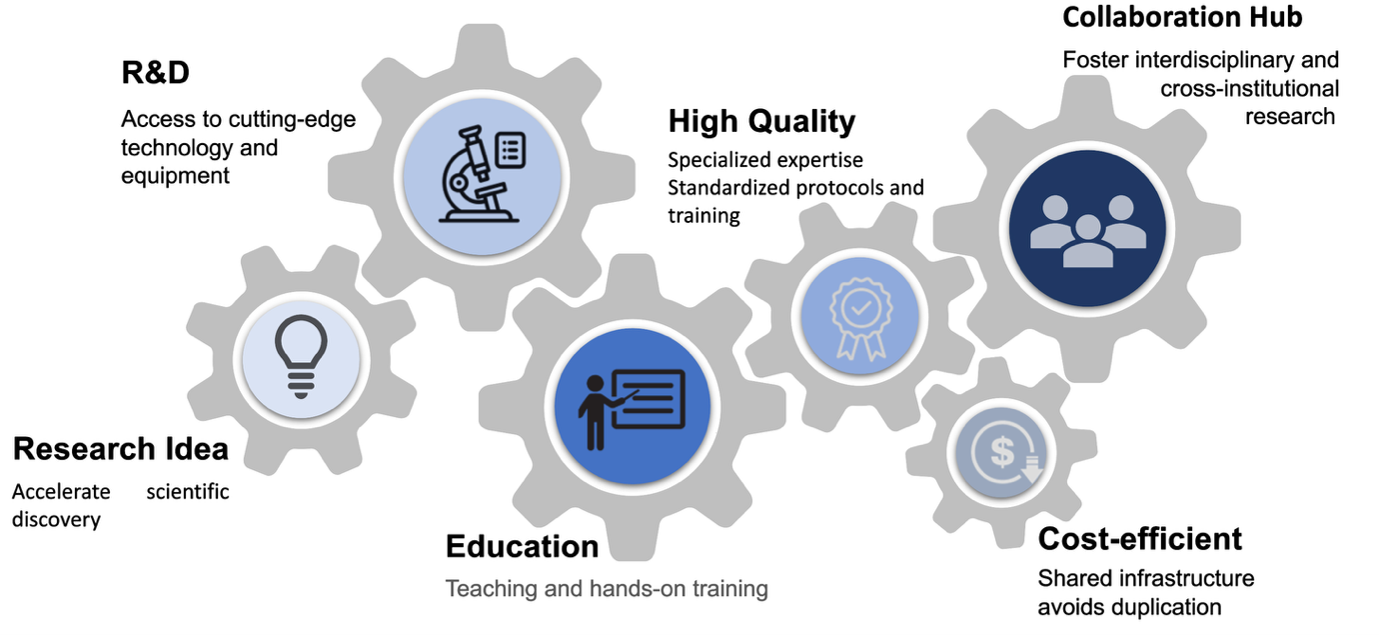
Whether you require complete project support or assistance with specific experimental steps, we work closely with research groups to deliver reliable results and accelerate stem cell research.